

Best Sofa Positioning Tips for Comfort
Sofa Position for Maximum Comfort and Style
Forget the old "push it against the wall" mantra. Your sofa's placement is crucial—it dictates the flow of your living space, impacts comfort, and sets the entire tone of the room. A poorly positioned sofa can make even the most beautiful room feel awkward and cramped, while a well-placed one can create an inviting and stylish haven. So, if you're ready to ditch the default layout and create a space that truly works for you, let's delve into the art of sofa positioning. This isn't about generic fluff; we're going to explore practical tips and design principles for the sofa position of your comfort and style!
The Golden Rule: Balance and Flow of Sofa Position
Before we start dragging your sofa around, let’s talk about balance. Your living room should feel inviting, not like a game of furniture Tetris. Here’s the deal with sofa position:
- Symmetry vs. Asymmetry: If you love order (or if your brain screams when things are off-center), a symmetrical layout with matching side tables or chairs is your bestie. For a more relaxed, artsy feel, go asymmetric with a statement chair or an offbeat coffee table.
- Traffic Flow: Make sure people aren’t tripping over your coffee table or awkwardly squeezing past your couch. Leave at least 2.5-3 feet of walking space around furniture.
- Focal Point Magic: Your sofa position should highlight a key feature—whether it’s a TV, fireplace, window view, or a fabulous gallery wall.
Small Spaces: Making the Most of Your Micro-Pad
Small spaces? Think Tetris, but for furniture. Every piece needs to pull its weight. Here’s the tea:
- Against the Wall, But Not Hugging It: Pushing your sofa directly against the wall can actually make the room feel smaller. Keep a slight gap (like 2-3 inches, no biggie) to create an illusion of depth. It's like giving your walls a little breathing room, and trust us, they'll appreciate it.
- L-Shaped Sofas = Game Changer: A sleek sectional is your secret weapon. It maximizes seating without overwhelming the space. Think of it as the MVP of small-space living. Just make sure it's not too bulky—we're going for cozy chic, not cramped chaos.
- Floating Sofas? Heck Yes!: This is a pro move. Instead of pushing it against a wall, try placing your sofa in the middle of the room to divide spaces (especially clutch for open-plan apartments). It creates distinct zones without closing things off. Add a console table behind it for extra storage and a touch of je ne sais quoi.
Medium-Sized Living Rooms (Where You Can Actually Breathe a Bit)
Medium-sized living rooms offer more flexibility. You've got room to play, but you still want to keep things intentional. Here's the lowdown:
- Center It Like a Star: If you've got the space, position your sofa in the middle of the room with chairs facing it to create a cozy conversation zone. It's giving main character energy. This works especially well if you have a fireplace or a killer view you want to highlight.
- The Classic L-Shape Setup: This is a classic for a reason. Pair a standard sofa with a chaise lounge or an accent chair to balance things out. It's comfy, stylish, and perfect for both chill nights and casual get-togethers.
- Ottoman Love: Swap a bulky coffee table with a stylish ottoman for extra seating and footrest action. It’s the ultimate multitasker, and it adds a touch of sophistication to your sofa position. Plus, who doesn't love putting their feet up after a long day?

Large Living Rooms A.K.A. The Social Butterfly Space
Large living rooms are a blank canvas. The key is to avoid making the space feel cavernous. Think zones, layers, and intentional design. Here's the blueprint:
- Multiple Sofa Arrangements: Two sofas facing each other? Iconic. A U-shaped seating area? Perfect for hosting. Don't be afraid to experiment with different configurations to find what works best for your social butterfly lifestyle.
- Divide & Conquer: If your living room is too big, create multiple seating zones—one for conversations, another for TV time, and maybe a reading nook. This breaks up the space and makes it feel more inviting.
- Layering Is Key: Rugs, side tables, and statement lighting are your besties. They add depth, texture, and personality to the space. Think of them as the finishing touches that tie everything together. Don't be afraid to mix and match styles to create a truly unique vibe.
Sofa Position by Vibes & Household Needs
Your home has a personality, and so does your lifestyle. The perfect sofa position isn’t just about aesthetics; it’s about function too. Here’s how to match your setup to your personal vibe and household needs.
Minimalist & Modern
If your style is clean and contemporary, opt for a sleek, low-profile sofa in neutral colors like gray, beige, or classic black leather. Keep it simple, centered, and aligned with other furniture to maintain a clutter-free look. Pair it with a glass or marble coffee table and clean geometric rugs for a touch of sophistication.
Boho & Artsy
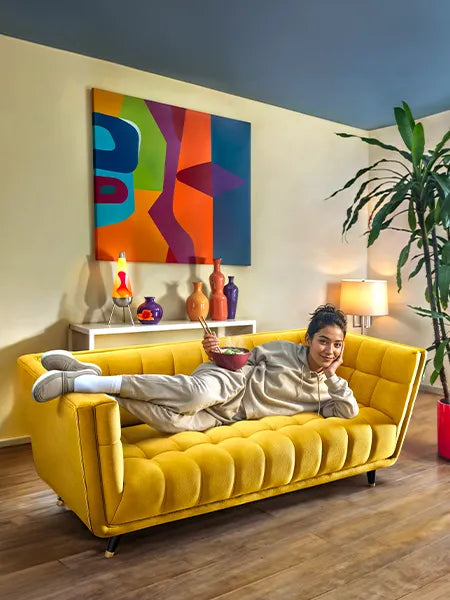
For the creative souls, a tufted velvet sofa in jewel tones like deep green, navy, or burnt orange is the way to go. Don’t be afraid of angles—let your sofa float in the middle of the room with woven rugs and eclectic decor. Layer pillows, throws, and mix-and-match furniture to create a relaxed, effortless aesthetic.
Rustic & Cozy
If your space screams cozy cabin vibes, an overstuffed sectional in warm, earthy tones is your best bet. Position it near a fireplace or a large window to create an inviting, snug atmosphere. Add wooden accents, knitted throws, and a chunky coffee table to complete the look.
Glam & Luxe
Love a little drama? A curvy or Chesterfield-style sofa in velvet or leather is a statement piece in itself. Center sofa position around a dazzling chandelier or a statement mirror to elevate the space. Go extra with gold or brass accents and high-end coffee table books to keep things chic.
For Families with Kids
Functionality is key when little ones are running around. Opt for stain-resistant fabric, sectionals, or recliners that can handle daily chaos. Positioning it against a wall maximizes play space, while an L-shape can help create a dedicated “kid zone.” Bonus tip? Avoid sharp-edged tables near the sofa to keep things toddler-friendly.
For Pet Parents
Your furry friend deserves a comfy spot too! Leather or microfiber sofas work best since they’re easy to clean and don’t trap fur. Position your sofa near a window so your pet can sunbathe while you relax. Using washable covers is a game-changer for keeping things fresh.
For Social Butterflies
If your home is the go-to spot for game nights and movie marathons, you need seating that encourages conversation. Large sectionals, U-shaped sofas, or modular seating arrangements are perfect. Arrange your sofa facing a coffee table or in a circle to make socializing easier. Adding extra poufs and ottomans ensures there's always room for more guests.
For Solo Dwellers
Living alone? A cozy loveseat or a futon can double as a nap spot and reading nook. Floating it in a corner with a stylish side table creates the perfect chill zone. Adding a standing lamp nearby makes for the ultimate late-night bookworm setup.
A Quick Look Back: A Tiny Sofa History Lesson
Believe it or not, sofas weren’t always the comfy nap zones they are today. Their history is surprisingly rich and reflects evolving social customs and design trends. Imagine a world without the plush comfort of your current sofa. In ancient Egypt, cushioned seating was a status symbol, reserved only for the elite. Think ornate, elevated platforms, a far cry from the sprawling sectionals we know and love. These early "sofas" were more about showcasing wealth and power than providing a cozy spot for a Netflix marathon. Even then, though, the desire for comfortable rest and relaxation was evident.
The Romans, ever the innovators, gave us the iconic chaise lounge. Picture elegant figures reclining on these elongated seats, enjoying feasts and social gatherings. These weren't just for lounging; they were a statement of sophistication and leisure. The chaise lounge became a symbol of Roman decadence and has persisted in various forms throughout history, often associated with luxury and style. It's a testament to the enduring appeal of a piece of furniture designed for ultimate relaxation.
Fast forward to the Victorian era, and we see the rise of the tufted Chesterfield. This iconic sofa, with its deep button tufting and rolled arms, became a symbol of Victorian opulence. It graced the drawing rooms of the wealthy and powerful, embodying the era's emphasis on formality and grandeur. These sofas weren't just comfortable; they were a display of social standing. Today, Chesterfields still evoke a sense of classic elegance, even as they've been adapted for modern tastes. From the simple benches of ancient times to the ornate Chesterfields of the Victorian era, the sofa's journey reflects our evolving relationship with comfort, style, and social expression. Now? Sofas are for everyone—whether you’re into sleek modern pieces, plush, sink-in-and-never-get-up sectionals, or anything in between.
Final Thought: Find Your Sofa Position
Ultimately, the "best" sofa position is subjective. It's about finding the sweet spot where comfort, functionality, and personal style intersect. There's no magic formula, so don't be afraid to experiment. Consider your lifestyle: Do you prioritize movie nights? Then perhaps angling your sofa towards the TV is key. Do you love entertaining? A more open arrangement that facilitates conversation might be ideal. Think about how you actually use the space and let that guide your decisions. Don't be afraid to break the "rules" if it means creating a space that truly feels like you.
Beyond the practical considerations, remember that your sofa is a focal point. It's a statement piece that anchors the room. So, think about the overall aesthetic you're trying to achieve. Does your sofa placement complement the other furniture and décor? Does it create a sense of balance and harmony? Consider the flow of natural light and how it interacts with your sofa. A well-placed sofa can enhance the architectural features of the room and create a sense of spaciousness, even in a smaller area.
So, take a step back and look at your living room with fresh eyes. Is your sofa truly living its best life? If not, don't be afraid to shake things up. Try a different angle of sofa position, experiment with different furniture arrangements, and add those personal touches that make the space feel warm and inviting. Your sofa should be more than just a piece of furniture; it should be a sanctuary—a place where you can relax, unwind, and truly feel at home.
FAQs:
- How much space should I leave between my sofa and the coffee table?
Aim for about 12-18 inches for comfortable movement.
- Can I put a sofa in front of a window?
Yes, but avoid blocking too much natural light and consider window treatments.
- What's the best sofa placement for a small living room?
Consider placing it against a wall, but not right up against it, or using a smaller L-shaped sectional.
- How do I arrange furniture in a large living room with a sofa?
Create distinct zones for conversation, entertainment, etc., using the sofa as an anchor.
- What if my living room is an odd shape?
Work with the angles, using the sofa to define spaces and create a sense of flow.
- What's the ideal distance between the sofa and the TV?
This depends on the TV size, but generally, it's between 7-10 feet.