


Here's something wild to think about: you've probably spent more time researching your last smartphone online than your mattress. Yet, you'll spend roughly one-third of your entire life on that mattress. That's around 26 years of your life, lying on a surface you probably picked in 20 minutes.
No pressure, right?
If you've been waking up with a stiff neck, tossing and turning, or feeling like you need a nap right after waking up, your mattress might be the actual culprit. And if you're thinking about switching to a memory foam mattress, you're on the right track. But here's the thing: not all memory foam mattresses are built the same. Picking the wrong one is almost as bad as sleeping on a bad spring mattress.
First, Why Memory Foam at All?
Memory foam was originally invented by NASA in the 1960s to improve seat cushioning and crash protection for pilots. Fast forward to today, and it's one of the most popular mattress materials on the planet, and for very good reason.
Here's what makes it special: memory foam is a viscoelastic material, meaning it responds to both heat and pressure. When you lie on it, it gently molds itself to your body's shape, distributes your weight evenly, and then bounces back to its original form once you get up. It essentially "remembers" your shape, hence the name.
Here, let’s go through step by step to finally see how to choose the best memory foam mattress:
Step 1: Understand Foam Density
Foam density is measured in PCF (pounds per cubic foot) and is arguably the single most important factor when choosing a memory foam mattress. Think of it as the "quality score" of the foam.
Low density (under 3 PCF): These feel soft and cushy immediately, but they tend to wear out faster, typically within 5-6 years. They also offer less support, which can aggravate back pain over time.
Medium density (3–5 PCF): This is the sweet spot for most sleepers. It offers a good balance of comfort, pressure relief, and durability. Most quality mattresses fall in this range.
High density (5+ PCF and above): Research from the Sleep Research Center found that high-density foam provides up to 95% pressure point reduction, making it ideal for people with chronic pain. It also lasts significantly longer — sometimes up to 15 years.
What to look for: Always check the density specs before buying. A good memory foam mattress should clearly mention the foam density or at least describe layers in terms of their function (support layer, comfort layer, etc.).
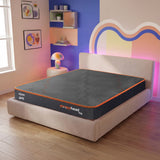
Sleepyhead's memory foam mattresses, for example, are built with a well-defined multi-layer system. Their popular Original BodyIQ mattress uses a firm high-density base foam for structural support, a pressure-relieving memory foam middle layer, and a breathable soft top layer, so you're getting layered density that serves a real purpose at each level.
Step 2: Check the Layers
A common misconception is that more layers = a better mattress. What actually matters is what each layer does and how they work together.
A well-engineered memory foam mattress typically has:
- A comfort layer on top: soft, contouring, pressure-relieving
- A transition layer in the middle: medium-firm, bridges comfort and support
- A base support layer at the bottom: high-density, which provides structural stability
Step 3: Match the Mattress to Your Sleeping Position

Your ideal firmness level depends heavily on how you sleep, and getting it wrong is a recipe for waking up sore.
✅Side sleepers need a softer to medium-firm mattress that cushions the shoulders and hips while keeping the spine aligned. Memory foam is actually ideal for side sleepers because it contours around pressure points.
✅Back sleepers need medium-firm support that keeps the spine in its natural curve without letting the lower back sink too deeply.
✅Stomach sleepers need a firmer surface to prevent the pelvis from sinking, which can strain the lower back.
✅Combination sleepers benefit from a responsive medium-firm memory foam that adapts quickly.
Step 4: Evaluate Motion Isolation
One of memory foam's biggest superpowers is motion isolation, the ability to absorb movement so your partner's midnight bathroom run doesn't wake you up.
If you share a bed, this feature alone can dramatically improve your sleep quality. You should look for mattresses that specifically advertise "zero partner disturbance" or "zero motion transfer."
Step 5: Don't Ignore the Warranty and Trial Period
A confident move from any good mattress brand is offering a trial period, because a mattress needs a few weeks to break in, and your body needs time to adjust to a new sleep surface. A 100-day trial is a solid benchmark to look for.
Also check:
- Warranty length: 7–10 years is decent; anything less is a red flag
- What's covered: sagging depth thresholds, manufacturing defects
- Return policy: Is it hassle-free?
Sleepyhead offers a 10-year warranty plus 100 nights trial policy on all of its memory foam mattresses and gives you long-term peace of mind on your investment.
So, Which Sleepyhead Memory Foam Mattress Is Right for You?
Here's a quick cheat sheet:
- Sleepyhead Original: Best all-rounder. Great for all sleep positions, has excellent back support, and you get pressure-relieving comfort with BodyIQ Memory Foam.
- Sleepyhead Sense: Best for hot sleepers. BodyIQ memory foam mattress with zonal support and cooling technology.
- Sleepyhead Prime: Best for those wanting premium orthopedic support. Three-layer BodyIQ system with advanced convoluted comfort foam and zero motion transfer.
- Sleepyhead Flip: Best for people with mixed preferences. Dual-comfort design means you can flip to the firmer or softer side depending on what you need.
You can explore the full Sleepyhead mattress collection at mysleepyhead.com.
Choosing a memory foam mattress doesn't have to be overwhelming. Focus on these key checkpoints: foam density, layer structure, your sleeping position, cooling features, motion isolation, and the brand's warranty and trial offer. When a mattress ticks all those boxes — at a fair price, that's when you know you've found the right one.
So, the next time you find yourself staring at the ceiling at 11 PM, wondering why you can't fall asleep, maybe it's time to stop blaming your phone and start blaming your mattress. And then, fix it.